
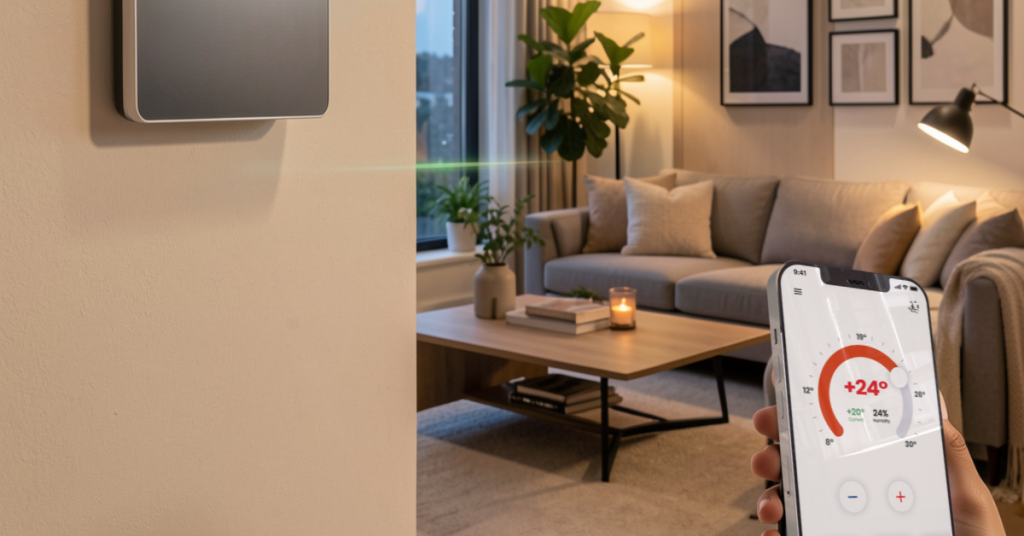
Heating is one of the most important systems in any home, yet it has traditionally been one of the least intelligent. For decades, residential heating control relied on simple thermostats, manual adjustments, and fixed schedules. While these solutions worked reasonably well, they often wasted energy and failed to adapt to real household behaviour.
Today, the landscape is changing quickly. Advances in connectivity, sensors, data analysis, and embedded computing are transforming how heating systems operate. The future of residential heating control is not just about adjusting temperature, it is about understanding how people live and responding to that in a smarter, more efficient way.
As homes become more connected and energy awareness grows, heating control is moving toward systems that are predictive, adaptive, and integrated into the broader ecosystem of smart homes.
From Manual Control to Intelligent Systems
Traditional thermostats were designed for simplicity. You set a temperature, and the heating system tries to maintain it. Programmable thermostats introduced scheduled heating, allowing homeowners to reduce heating during the night or when they were away.
However, these systems still rely heavily on manual setup. People need to create schedules, update them when routines change, and remember to adjust settings during holidays or seasonal transitions. In reality, many households either never program their thermostats or stop updating them after a short time.
This is where modern smart heating control comes in. Instead of relying solely on user input, intelligent thermostats can analyse patterns, detect occupancy, and learn routines over time. The goal is simple: maintain comfort while using as little energy as possible.
The idea of a smart thermostat that learns your routine is no longer futuristic. It is becoming an expected feature of modern heating solutions.
The Role of Sensors and Data
One of the key drivers behind smarter heating control is the increasing availability of data. Modern heating devices can use a variety of inputs to make better decisions.
These may include:
- Room temperature and humidity
- Occupancy detection
- Window opening detection
- Weather forecasts
- Historical heating behaviour
By combining these data sources, heating systems can move from reactive control to predictive control. Instead of simply responding to temperature drops, the system can anticipate them.
For example, if the system knows that residents usually return home around 18:00, it can begin heating the home earlier, ensuring comfort exactly when needed. Similarly, if a window is opened for ventilation, heating can automatically pause to prevent energy waste.
These small adjustments may seem minor, but over time they can significantly reduce energy consumption while maintaining a consistent indoor climate.
Artificial Intelligence in Heating Control
Artificial intelligence is another factor shaping the future of residential heating. While the term can sometimes be overused, machine learning is genuinely useful in this context.
Heating behaviour depends on many variables, including building insulation, radiator size, outside temperature, and individual comfort preferences. Traditional thermostats cannot account for all these factors, but AI-driven systems can gradually learn how a specific home behaves.
For instance, an intelligent thermostat may learn:
- how quickly a room heats up
- how long heat is retained after heating stops
- which rooms are used most frequently
- how weather conditions affect indoor temperature
Over time, the system builds a model of the home and uses that model to make better heating decisions.
Some modern solutions even run these algorithms directly on the device itself. Running intelligence locally improves reliability and responsiveness while reducing dependency on cloud services. This approach is becoming increasingly common in modern embedded systems.
One example of this direction is the on-device intelligence used in modern smart thermostats, where algorithms run directly on the thermostat hardware instead of relying entirely on remote servers.
Energy Efficiency and Sustainability
Energy efficiency is becoming a central topic in residential heating. Rising energy costs, climate goals, and government regulations are pushing homeowners and technology providers to rethink how heating is managed.
In many European countries, heating accounts for a large portion of household energy consumption. Even small improvements in efficiency can therefore have a significant impact.
Smart heating control contributes to sustainability in several ways:
- reducing unnecessary heating
- adjusting heating to real occupancy patterns
- integrating with renewable energy sources
- providing insights into energy usage
For homeowners, this often translates into lower energy bills and greater transparency about how energy is consumed.
At the same time, smarter heating systems can support broader energy management strategies, especially in homes equipped with solar panels, heat pumps, or home energy management systems.
Integration with the Smart Home Ecosystem
Heating control does not exist in isolation anymore. Increasingly, it is becoming part of a larger smart home ecosystem.
Modern homes may include connected lighting, security systems, voice assistants, and energy management platforms. Heating systems can interact with these technologies to provide a more seamless living experience.
For example:
- heating can be reduced automatically when the home security system is armed
- voice assistants can adjust temperature through simple commands
- smart home hubs can coordinate heating with ventilation systems
Connectivity standards such as Matter are helping to simplify this integration, allowing devices from different manufacturers to communicate more easily.
This trend toward interoperability is important because homeowners rarely want isolated devices. Instead, they prefer systems that work together smoothly.
The Importance of Reliability
While innovation drives the heating industry forward, reliability remains essential. Heating systems are critical infrastructure inside the home. If they fail, the consequences can range from discomfort to frozen pipes in colder climates.
This means that modern heating control solutions must balance innovation with stability. Connectivity, remote control, and intelligent algorithms should enhance reliability, not compromise it.
Many manufacturers are therefore investing heavily in robust embedded software, secure communication protocols, and fail-safe mechanisms.
For example, even when connectivity is temporarily unavailable, the heating system must continue operating normally. Local control and on-device intelligence help ensure that essential functionality remains available at all times.
Companies working in this field, including eCozy, increasingly focus on combining smart features with dependable hardware design.
User Experience Matters More Than Ever
Another important aspect of the future of heating control is user experience. Technology should simplify life, not complicate it.
Some early smart home products required complex setup processes or constant manual interaction. Over time, the industry has realised that the most successful solutions are those that work quietly in the background.
Good heating control should feel almost invisible. Once installed, it should require minimal attention while consistently maintaining comfort.
This means:
- intuitive mobile apps
- simple installation processes
- automatic optimisation of heating behaviour
When technology works this way, homeowners do not need to think about heating management at all. Comfort simply becomes the default.
What the Next Decade May Bring
Looking ahead, several trends are likely to shape residential heating control in the coming years.
First, more intelligence will move directly onto devices. Advances in microcontrollers and embedded AI make it possible to run sophisticated algorithms locally.
Second, heating control will increasingly connect with broader energy management systems. Homes may dynamically adjust heating based on electricity prices, renewable energy availability, or grid demand.
Third, interoperability will continue improving. Standards like Matter and other open ecosystems will make it easier to combine devices from different manufacturers.
Finally, the line between heating control and overall home comfort management will blur. Temperature, air quality, humidity, and ventilation will be managed together rather than separately.
In this evolving landscape, companies such as eCozy are exploring how intelligent control, embedded computing, and reliable hardware can work together to make homes more comfortable and energy efficient.
Conclusion
Residential heating control is undergoing a quiet but important transformation. What used to be a simple mechanical function is becoming a data-driven, adaptive system that responds to how people actually live.
Smarter sensors, predictive algorithms, and improved connectivity are helping heating systems deliver both comfort and efficiency. At the same time, reliability and simplicity remain critical, especially in technologies that people depend on every day.
The future of heating control is not about adding complexity. It is about creating systems that understand the home, anticipate needs, and operate smoothly in the background.
As this technology continues to evolve, homeowners will likely notice something simple but meaningful: their homes feel comfortable more consistently, while energy is used more wisely.