
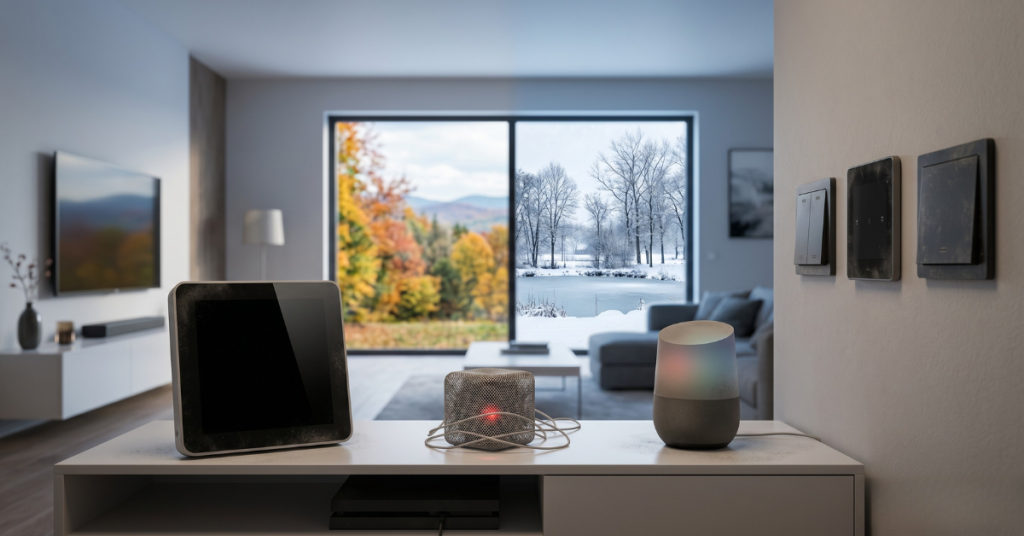
Spring is when heating systems fade into the background, and that is exactly when a quiet pattern becomes visible: many smart home products do not fail suddenly, they simply stop being used as intended. During the first weeks everything works, installation is smooth, schedules are set, and there is a sense of control. But over time, that “perfect setup” starts drifting away from reality.
The Illusion of the Perfect Setup
At the beginning, systems feel accurate because users invest time and attention. But this setup is built on assumptions that rarely hold:
- routines stay stable
- comfort preferences remain constant
- daily life follows predictable patterns
In reality, behaviour shifts constantly. A system that does not evolve with it slowly becomes misaligned.
Comfort Is Not a Fixed Number
Most smart home products reduce comfort to a temperature value, but comfort is dynamic. The same setting can feel different depending on context:
- outdoor temperature and weather conditions
- sunlight and time of day
- humidity and air quality
- activity levels inside the home
Because of this, users start adjusting manually. These adjustments are not exceptions, they become part of daily use, and automation loses its role.
The Problem with Schedules
Schedules promise simplicity, but they depend on predictability. They assume:
- consistent wake-up times
- regular work hours
- stable evening routines
Even small deviations break this logic. Users begin overriding schedules, and over time:
- adjustments become frequent
- trust in automation decreases
- schedules are eventually ignored
What was designed as a core feature becomes irrelevant.
Manual Control Is Valuable Feedback
Manual input is often seen as a failure of automation, but it is actually one of the most useful signals. Every adjustment reflects a real need in a specific moment. The problem is that most systems do not learn from these actions:
- changes are treated as temporary exceptions
- patterns are not recognised
- behaviour is not updated
This leads to repeated manual corrections without improvement.
The Missing Feedback Loop
Many devices collect data, but few interpret it in context. Actions can have different meanings:
- lowering temperature might mean discomfort
- or preparation to leave
- or a short-term preference change
Without understanding intent, systems cannot adapt correctly. Over time, this creates a gap between system behaviour and real user needs.
Designed for the Start, Not for the Season
Most products are optimised for onboarding, not long-term use. They perform well when everything is new, but real homes are dynamic environments:
- seasons evolve
- behaviour changes
- expectations shift
If a system does not adapt continuously, it falls out of sync.
Trust Erodes Quietly
Failure rarely happens at once. It builds gradually through small moments:
- temperatures feel slightly off
- schedules miss expectations
- manual intervention increases
Users do not necessarily stop using the product, but they rely on it less. It remains present, but no longer essential.
What Needs to Change
Long-term relevance requires a different approach, not more features, but better alignment with reality:
- treat comfort as dynamic, not fixed
- see manual input as feedback, not error
- adapt continuously, not occasionally
- design for changing routines, not static schedules
At eCozy, we see that real heating behaviour is fluid and evolving. Systems that remain useful are those that stay in sync over time, rather than those that aim for a perfect initial setup.
Because the first season is easy. The real challenge is staying relevant after it.