
For years, the smart thermostat was seen as one of the first truly useful smart home devices. It solved a real problem: wasting energy without sacrificing comfort. Instead of manually adjusting temperatures throughout the day, households could finally automate heating based on routines, presence, and weather conditions.
But technology rarely stops evolving once a problem is partially solved. Today, many households already have connected heating systems, mobile apps, and automated schedules. Smart thermostats are no longer a futuristic idea. They have become an expected part of modern living. The bigger question now is different:
What happens after the smart thermostat? The answer is not necessarily another single device. The future of home energy management is moving toward systems that are more adaptive, less visible, and far more connected than before.
From Smart Devices to Smart Decisions
The first generation of smart home products focused heavily on control. Apps allowed users to switch devices on and off remotely, create schedules, or monitor usage. That was a major improvement over traditional systems, but it still required users to make most decisions themselves.
The next phase is about reducing the need for manual interaction altogether. Instead of asking users to constantly adjust settings, future systems will increasingly learn from behaviour patterns, environmental data, and household dynamics. Heating systems may begin adjusting automatically based on occupancy trends, weather forecasts, electricity prices, insulation performance, or even seasonal lifestyle habits.
In other words, the goal is no longer just remote control. The goal is intelligent adaptation. This shift is already visible in many connected home ecosystems, including solutions like eCozy 2.0, where automation becomes less noticeable and more naturally integrated into everyday life.
Energy Efficiency Is Becoming a Bigger Priority
A few years ago, smart home technology was often marketed as a convenience upgrade. Today, energy efficiency is becoming the stronger motivation. Rising energy costs, climate concerns, and growing awareness around consumption patterns are changing how people think about their homes. Consumers are no longer only asking whether a device is smart. They are asking whether it genuinely helps reduce waste and optimise daily energy usage.
This changes the expectations placed on connected devices. Future systems will likely focus less on flashy features and more on measurable efficiency improvements, including:
- Smarter room-by-room heating behaviour
- Better detection of unused spaces
- Improved integration with renewable energy systems
- More predictive temperature management
- Automated energy-saving routines
- Better long-term consumption insights
The most successful products may not be the ones with the most features. They may be the ones that quietly reduce unnecessary consumption without creating additional complexity.
The Invisible Smart Home
One interesting direction in smart home technology is that the best systems are becoming less visible over time. Early smart homes often felt highly interactive. Users constantly checked apps, adjusted settings, created automations, and experimented with integrations. For many people, that experience eventually became tiring rather than helpful.
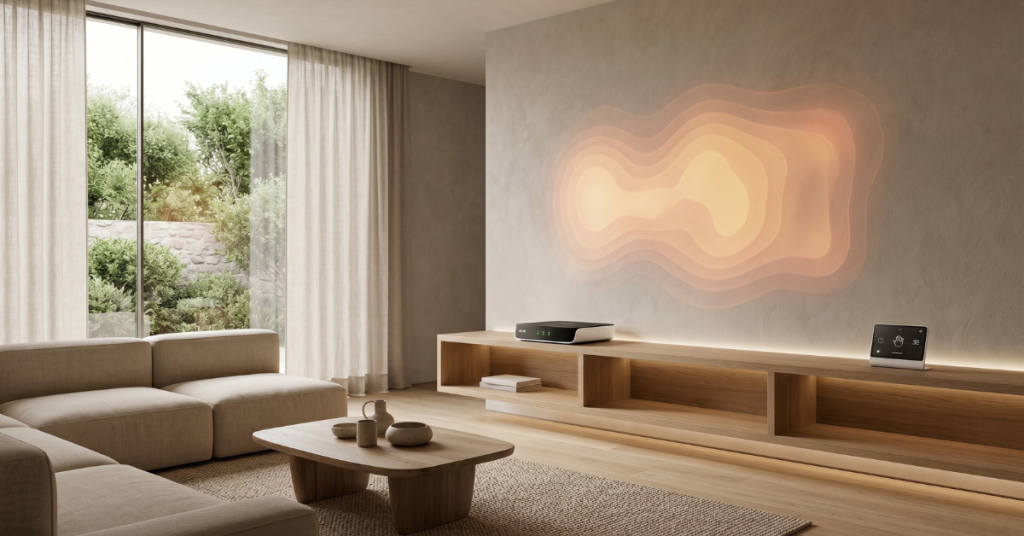
Now the industry is slowly moving toward a different philosophy: technology that works in the background. The ideal connected home may eventually feel almost invisible. Devices communicate quietly, heating adjusts naturally, and systems optimise themselves with minimal user involvement.
In practice, this means fewer notifications, fewer manual actions, and fewer moments where users feel like they need to manage technology itself. The technology becomes infrastructure rather than entertainment.
This approach may also make smart home adoption easier for people who are less interested in technology but still want practical benefits such as lower energy bills and improved comfort.
Connected Ecosystems Matter More Than Individual Products
Another major shift is happening around interoperability. In the early days of smart homes, many devices operated in isolated ecosystems. Different brands often struggled to communicate properly with one another, creating frustrating user experiences.
That is gradually changing. Consumers increasingly expect heating systems, lighting, sensors, energy monitoring, and mobile platforms to work together seamlessly. Compatibility is becoming more important than standalone features.
As standards improve and ecosystems mature, the value of a smart thermostat may depend less on the device itself and more on how effectively it fits into a broader home environment. This also creates new opportunities for automation. For example, future systems could combine heating data with:
- Window sensor activity
- Air quality monitoring
- Dynamic electricity pricing
- Solar panel production
- Occupancy prediction
- Weather forecasting systems
The result is a more holistic approach to home energy management rather than isolated temperature control.
Data Will Become More Useful, But Simplicity Still Wins
Smart homes generate enormous amounts of data. The challenge is making that data useful without overwhelming users. Most people do not want to analyse charts every day. They want clear outcomes:
- Lower costs
- Better comfort
- Fewer manual adjustments
- Improved efficiency
This means future smart home systems will likely prioritise simplicity in the user experience while increasing complexity behind the scenes.
Artificial intelligence and predictive automation may play a larger role here, but not in a flashy or futuristic way. In many cases, the best automation is barely noticeable.
If a heating system quietly adapts to seasonal behaviour and helps reduce consumption without constant interaction, many users will consider that more valuable than dozens of advanced manual settings.
Sustainability Will Shape Product Development
The future of connected heating is also closely tied to sustainability goals. Across Europe, households are becoming more aware of their environmental footprint. Governments are introducing stricter energy regulations, while consumers increasingly look for products that support more responsible energy use.
This trend is likely to accelerate. Future smart home technologies may place greater emphasis on:
- Reducing overall household energy demand
- Supporting renewable energy integration
- Extending product lifespan
- Minimising unnecessary hardware upgrades
- Improving software efficiency over time
This is particularly important because consumers are becoming more cautious about replacing devices too frequently. People increasingly expect products to improve through software updates and ecosystem integration rather than constant hardware replacement cycles.
The Future Is Probably Quieter Than Expected
When people imagine the future of smart homes, they often picture dramatic innovation: robots, voice assistants everywhere, or highly futuristic interiors.
The reality may be much quieter.
The next stage after the smart thermostat is likely not a single revolutionary device. It is a gradual evolution toward homes that manage energy more intelligently in the background.
Less manual control.
Less wasted energy.
Less unnecessary complexity.
More comfort without constant interaction. The smartest systems of the future may actually feel the least intrusive. And that could ultimately be the biggest shift of all.